For newly established clothing startups and small apparel businesses with limited startup capital, no independent factory resources, and immature supply chain systems, private label T-shirt OEM serves as the most practical, low-threshold, and cost-effective business solution. Unlike traditional garment manufacturing that requires huge investment in production equipment, workshops, and professional production teams, private label T-shirt OEM allows brand founders to focus entirely on brand positioning, product design, market operation, and customer maintenance while outsourcing all production links to professional garment manufacturers. With flexible order quantities, simple production processes, and universal market applicability, customized private label T-shirts become the ideal entry product for new clothing brands to test market demand, accumulate target audiences, build initial brand awareness, and reduce inventory and operational risks. This comprehensive guide systematically elaborates on the complete operation process of private label T-shirt OEM for startups, sorts out core preparation work, supplier screening standards, production quality control key points, and common industry pitfalls, helping new clothing teams efficiently complete product layout and achieve stable brand initial development.
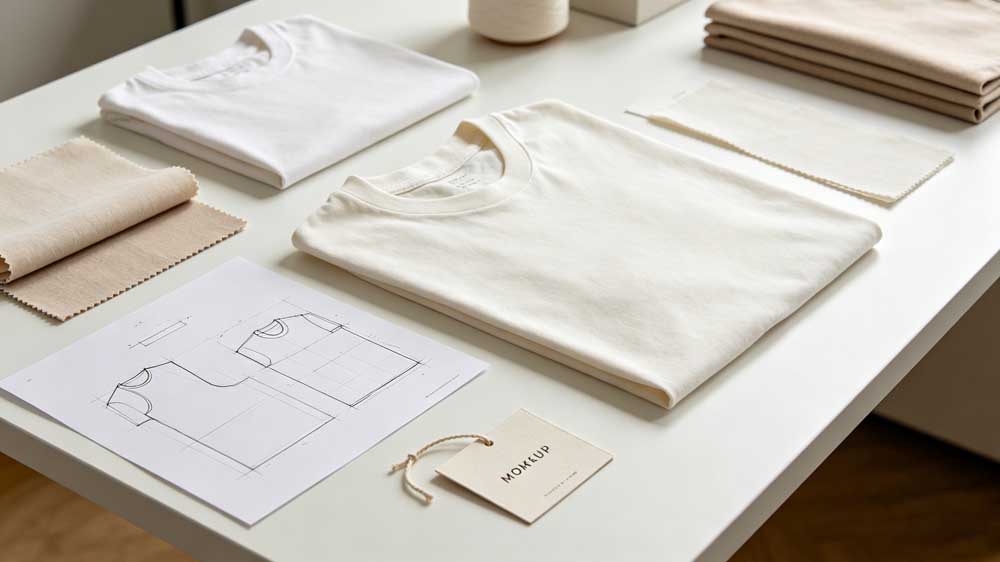
1. Basic Concept: What Is Private Label T-Shirt OEM
1.1 Core Definition
Private label T-shirt OEM is a professional garment customization and production cooperation model tailored for independent clothing brands and startup merchants. In this business mode, clothing startups act as the brand side, putting forward exclusive product design schemes, brand logo standards, personalized customization requirements, and product parameter specifications. Professional qualified garment factories serve as the production side, undertaking all production links including fabric procurement, fabric inspection, cutting, sewing, stitching, finishing, quality inspection, and finished product packaging. After the whole production process is completed, all finished T-shirt products are affixed with the startup’s independent brand logo, tags, and washing labels, and are fully owned, operated, and sold by the brand side. This model realizes the separation of brand operation and physical production, enabling new brands to launch exclusive customized T-shirt products without building their own production lines.
1.2 Differences Between OEM / ODM / White Label
Most startup brands easily confuse OEM, ODM, and white label customization modes in the early stage of cooperation, and choosing the wrong cooperation mode will lead to increased costs, prolonged cycles, or inconsistent product positioning. The three mainstream private label T-shirt customization modes have clear differences in design autonomy, product uniqueness, production cycle, and comprehensive cost. OEM (Original Equipment Manufacturer) refers to pure customized processing based on brand-owned designs, where the brand provides complete design drawings, process requirements, and product standards, and the factory only completes production and processing without any right to modify the design; products are completely exclusive to the brand with high uniqueness. ODM (Original Design Manufacturer) means the factory provides mature and existing T-shirt styles and plate types developed independently, and the brand only carries out secondary customization such as replacing brand logos, adjusting local details, and matching exclusive colors, which features fast delivery and moderate customization freedom. White label T-shirt customization is the most basic and lightweight cooperation mode, adopting universal blank T-shirt base styles with fixed fabrics and versions, and only printing or embroidering the brand’s exclusive logo on the products; it has the lowest production cost and the shortest proofing and mass production cycle, suitable for brand initial trial sales and market testing.
1.3 Why Startups Choose T-Shirt Private Label
T-shirts have always been the most popular and market-resistant core category in the casual apparel industry, which is the key reason why almost all new clothing startups take private label T-shirt OEM as their first product layout. First, the overall startup cost of T-shirt customization is low, with no need for high investment in equipment, inventory, and personnel, greatly reducing the threshold for clothing entrepreneurship. Second, regular T-shirt OEM factories support flexible low MOQ orders, which completely fits the small-batch trial sales demand of new brands and avoids the operational risk of overstocking a large number of unsold products. Third, T-shirt production processes are relatively simple and mature, with stable product quality and few process errors, effectively reducing the defective rate and after-sales pressure. In addition, T-shirts have a wide audience, covering men, women, and unisex groups, and are suitable for all seasons and multiple usage scenarios such as daily wear, trend matching, and peripheral customization, which helps new brands quickly accumulate user groups and market reputation in the early stage and lay a foundation for subsequent multi-category expansion.
2. Pre-Cooperation Preparation: Brand & Product Positioning
2.1 Clear Brand Positioning
Before docking with OEM factories for customization cooperation, startups must complete clear brand positioning, which determines the subsequent product customization standards, process selection, and market sales strategies. First, it is necessary to lock the core target customer group, including customer gender positioning (men’s wear, women’s wear, unisex neutral style), age group distribution (teenagers, young people, middle-aged groups), and consumption level orientation (entry mass consumption, mid-end daily consumption, high-end trend customization). Second, clarify the fixed brand style tonality, such as minimalist daily style, street trend style, retro vintage style, sports casual style, and high-end ins style, to ensure that all customized T-shirt products maintain unified style characteristics. Finally, confirm the main sales channels of the products, including cross-border e-commerce platforms, independent brand stations, physical offline stores, social media live streaming, and private domain sales, as different sales channels have different requirements for product quality, packaging standards, and cost control.
2.2 T-Shirt Product Standard Confirmation
Clear and unified product parameter standards are the core premise for smooth OEM cooperation and consistent finished product quality. Startups need to sort out complete T-shirt product specifications before placing orders. In terms of fabrics, select mainstream and practical materials according to brand positioning, including pure cotton, polyester cotton blend, pure polyester, and high-quality combed cotton, with different fabrics corresponding to different wearing feelings and application scenarios. In terms of fabric weight, common conventional specifications are 180g, 200g, and 230g; lightweight fabrics are suitable for summer thin styles, while heavyweight fabrics are more textured and suitable for trend streetwear. It is also necessary to confirm detailed product parameters including neckline technology (round neck, crew neck, polo neck), sleeve length (short sleeve, long sleeve, three-quarter sleeve), overall version (loose oversize version, conventional casual version, slim fitted version), and fixed product color system, so that the factory can carry out standardized proofing and mass production.
2.3 Sort Out Custom Demand List
Incomplete customization demands are the main cause of repeated proofing, order modification, and additional hidden costs in OEM cooperation. Startups need to sort out a detailed and clear personalized customization demand list before docking with suppliers. The list needs to cover all personalized details of the product: the specific position, size, and process mode of brand logo printing or embroidery; the design scheme and production requirements of exclusive customized patterns and graphic prints; the customization standards of brand accessories, including main neck labels, size labels, and washing labels with exclusive brand information; and personalized demands such as special fabric washing, vintage distressing, and edge grinding technology. In addition, it is necessary to clarify finished product packaging requirements, including independent dust-proof packaging, customized outer carton specifications, and matching brand greeting cards or product brochures, to ensure that all customized details are accurately communicated to the factory and avoid errors and omissions in the production process.
3. Supplier Selection & Factory Audition Guide
3.1 Core Screening Criteria for Factories
The comprehensive strength of the OEM factory directly determines the product quality, delivery cycle, and after-sales service level, so startups need to screen suppliers through multiple core dimensions. First, check the factory’s MOQ threshold and flexible order policy to confirm whether it supports small-batch trial orders suitable for new brands. Second, verify the factory’s formal production qualifications, industry certification documents, and production scale to ensure standardized and compliant production. Third, assess the stability of fabric supply, confirm whether the factory has long-term stable fabric suppliers, and avoid quality differences and delivery delays caused by fabric replacement. Fourth, investigate the factory’s independent customization capability and proofing efficiency, including print embroidery technology, pattern customization, and personalized process realization ability. Meanwhile, comprehensively evaluate the factory’s proofing cycle, mass production delivery time, after-sales problem handling efficiency, and customer reputation, and give priority to suppliers with complete after-sales guarantee mechanisms and stable cooperative cases.
3.2 Effective Factory Audition Steps
For new clothing startups without rich supply chain experience, standardized factory audition steps can effectively screen high-quality suppliers and avoid unreliable cooperation resources. The complete audition process is divided into five core steps: first, check the factory’s official qualification certificates, production licenses, and industry certification documents to confirm its formal production qualifications; second, review the factory’s past cooperative brand cases and finished product samples to judge its production level and customization capability; third, apply for official product proofing, select core styles and processes for sample making, and test the factory’s proofing cycle, response efficiency, and process refinement; fourth, carefully check the sample’s fabric texture, version accuracy, printing and embroidery firmness, and detail workmanship to verify whether it meets brand standards; fifth, confirm the factory’s formal mass production standards, unit price quotation system, and order contract terms, and lock in all production and after-sales clauses to prepare for formal order placement.
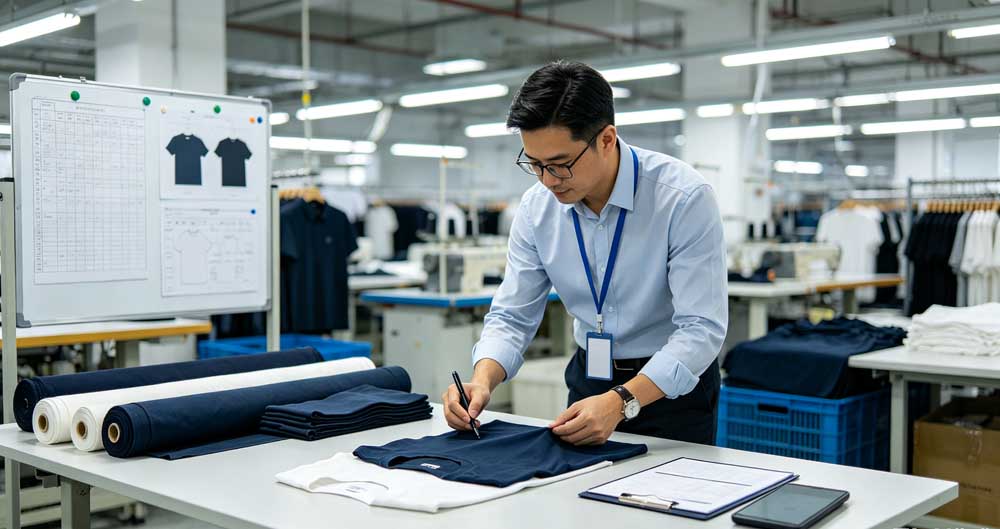
3.3 How to Avoid Unqualified Suppliers
The apparel OEM industry has many irregular small factories and middlemen, and startups are prone to encounter various cooperation pitfalls in the selection process. It is necessary to stay away from unqualified suppliers with obvious risk characteristics. First, reject factories with ultra-low abnormal quotations; excessively low prices often mean cut corners on fabrics and processes, and hidden secondary charges in the later stage. Second, avoid suppliers with ambiguous MOQ rules and inconsistent quotation standards, who often temporarily raise order thresholds and unit prices after order confirmation. Third, screen out factories with slow proofing response, long production cycles, and unstable communication efficiency, which are easy to cause delayed delivery and affect product launch plans. Most importantly, do not cooperate with suppliers who refuse to sign formal cooperation contracts and lack clear after-sales clauses, so as to avoid no way to claim compensation for defective products, delayed delivery, and quality problems in the later stage.
4. Full Process of OEM Cooperation & Production Control
4.1 Standard Cooperation Process
Standardized and standardized OEM cooperation processes can effectively avoid communication errors and order disputes, and help startups efficiently complete order customization. The complete and mature cooperation process for private label T-shirt OEM is as follows: first, complete demand docking with the factory, sort out product parameters, customization processes, order quantity, and delivery requirements, and obtain an official detailed quotation; second, confirm the quotation and cooperation details, sign a formal legal cooperation contract, and clarify all clauses such as production standards, delivery cycle, after-sales liability, and breach of contract compensation; third, pay the order deposit according to the contract agreement, and the factory arranges official proofing production; fourth, the brand side checks and confirms the finished sample, and locks the final production standard; fifth, the factory launches full-scale mass production in accordance with the confirmed sample and process standards; sixth, complete full quality inspection of finished products after production; seventh, the brand side pays the balance payment, and the factory arranges finished product packaging, delivery, and logistics distribution; finally, complete order settlement and after-sales follow-up.
4.2 Key Links of Quality Control
Quality control is the core link to ensure qualified finished T-shirt products and stable brand reputation, and startups need to grasp key inspection points in the whole production cycle. Before formal mass production, complete fabric inspection, including checking fabric composition, weight, color difference, and texture, to ensure that the fabric is consistent with the confirmed sample and no defective materials are used. During the production process, track the production progress in real time, inspect key processes such as cutting accuracy, sewing uniformity, and neckline shaping technology, and timely correct irregular operation problems in the production process. After the completion of finished products, conduct a full inspection of all products, including size deviation, overall color difference, printing and embroidery firmness, thread end trimming, and product flatness. Strictly screen and eliminate defective products with unqualified workmanship, and finally check whether the finished product packaging, labeling, and accessories meet the brand’s customized standards to ensure that all delivered products reach the market sales level.
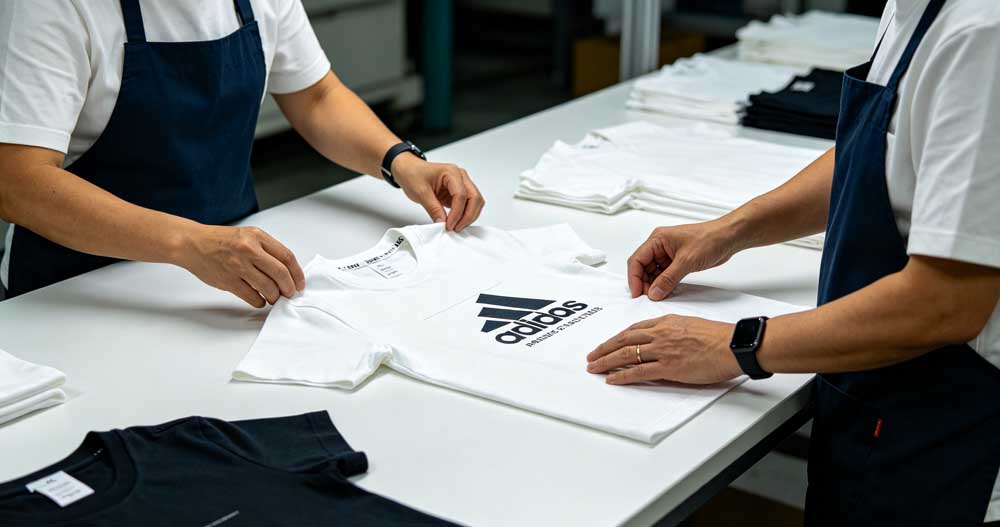
4.3 MOQ & Cost Control Skills for Startups
For cash-flow limited new clothing startups, reasonable MOQ arrangement and cost control are crucial to reducing entrepreneurial risks and improving profit margins. In terms of order quantity, adopt the small-batch trial production mode for new styles, place low-quantity trial orders for newly developed T-shirt styles to test market feedback, and expand the order quantity only after confirming good market acceptance. In terms of MOQ negotiation, fully communicate with regular factories, negotiate flexible batch order policies, and realize mixed batch production of multiple styles to reduce the single-style order threshold. In terms of cost allocation, reasonably match high-cost customized styles and conventional low-cost basic styles to balance the overall order cost. At the same time, strictly control the customization cost of auxiliary materials such as tags, labels, and packaging, select cost-effective auxiliary material schemes on the premise of ensuring brand texture, and avoid excessive customized details leading to increased unnecessary costs.
5. Custom Craft Selection & Matching Suggestions
5.1 Common T-Shirt Printing & Embroidery Crafts
The diversification of printing and embroidery crafts is the key to forming product differentiation, and different processes have obvious differences in texture, cost, durability, and applicable scenarios. Screen printing is the most mainstream and mature process, with clear patterns, strong color fastness, low comprehensive cost, and suitable for large-area pattern customization and mass production. Heat transfer printing has the advantages of fast production speed and no MOQ limit, with fine pattern details, but slightly poorer air permeability, suitable for small-batch personalized pattern customization. DTG direct injection technology can present ultra-clear and complex pattern layers, with soft hand feel and good air permeability, suitable for high-end customized styles and detailed graphic design. Embroidery technology has three-dimensional and high-grade texture, strong wear resistance and durability, mostly used for brand logo local customization to improve product grade. Flocking printing has a unique velvet three-dimensional feeling, with strong fashion sense, suitable for trend streetwear style T-shirt customization.
5.2 High-Cost Performance Craft Matching Scheme
Different brand positioning and product styles correspond to different optimal craft matching schemes. Reasonable process collocation can balance product texture and production cost, helping startups create competitive products. For entry-level mass-selling basic T-shirts that focus on cost performance and market popularity, it is recommended to match screen printing with conventional label customization, which ensures stable quality and low cost, suitable for large-volume market sales. For mid-to-high-end customized T-shirts that focus on product texture and brand grade, adopt DTG direct injection fine printing or local embroidery logo matching scheme, with delicate details and high product grade, which is conducive to shaping high-end brand positioning. For trend streetwear and vintage-style T-shirts with strong personalization, choose flocking printing, vintage washing, and local special process matching to highlight product differentiation and fashion sense, so as to stand out in the homogeneous casual wear market.
6. Order Delivery, Packaging & After-Sales Processing
6.1 Custom Packaging Solution
Exquisite and exclusive brand packaging is an important part of improving product texture and user shopping experience, and is also a key detail to shape brand image. Startups can formulate targeted packaging schemes according to product positioning and sales scenarios. For daily mass-selling T-shirts, adopt independent transparent OPP dust-proof bag packaging to ensure that the products are clean, wrinkle-free, and convenient for storage and transportation. For mid-to-high-end customized products, match exclusive customized cartons with brand LOGO printed, and equip with professional product folding and packaging processes to improve the overall grade. In addition, add personalized brand accessories appropriately, such as customized brand greeting cards, product introduction brochures, and brand stickers, which can enhance users’ brand recognition and sense of ceremony, help the new brand quickly leave a deep impression on customers, and improve product repurchase rate.
6.2 Common Problems & After-Sales Solutions
Various minor problems may inevitably occur in the OEM production and delivery process, and perfect after-sales processing mechanisms can effectively protect the rights and interests of startup brands. Common product problems include fabric color difference, size parameter deviation, loose thread ends, incomplete printing patterns, and falling off of printed and embroidered parts, as well as logistics problems such as delayed delivery and damaged packaging. Before placing an order, startups need to clarify the factory’s after-sales liability clauses in the contract, confirm the defective product rework and replacement mechanism, color difference and size error compensation standards, and delayed delivery penalty rules. After receiving the goods, check the finished products in a timely manner, sort out defective and unqualified products, and feedback to the factory for re-production, replacement, or compensation according to the contract terms, so as to avoid brand losses caused by factory production errors.
7. Startup Operation & Market Selling Tips
7.1 New Product Launch Strategy
New clothing startups should adopt a steady new product launch strategy based on small-batch trial sales to avoid blind large-scale order placement and inventory backlog risks. After the completion of OEM customized T-shirt production, take small-batch products for online and offline trial sales, collect real market feedback including customer evaluation, wearing experience, style preference, and price acceptance. According to user feedback data, timely optimize and iterate product details such as fabric comfort, version fitting, and pattern design. For styles with good market response and high repurchase intention, gradually increase the order quantity and expand market promotion; for styles with poor feedback, adjust the design in a timely manner or stop sales to reduce inventory pressure. This iterative launch mode can help new brands quickly adapt to market demand and realize stable product operation.
7.2 Brand Differentiation Building
The T-shirt market has serious product homogeneity, and building exclusive brand differentiation is the core for new startups to break through the market. Startups can shape unique brand characteristics through multiple dimensions. In terms of product design, create exclusive original patterns and personalized graphic elements to avoid public template styles on the market. In terms of production technology, select unique personalized processes such as vintage washing, partial distressing, and special embroidery to form unique product texture advantages. In terms of packaging services, create exclusive brand packaging systems and intimate after-sales services to improve user experience. At the same time, fix the brand’s consistent style tonality and market positioning, form exclusive brand memory points in the minds of users, and gradually get rid of homogeneous price competition, so as to build long-term brand competitiveness.
8. Common Pitfalls & Risk Summary
Most new clothing startups lack supply chain experience, and they are easy to fall into various hidden pitfalls in private label T-shirt OEM cooperation, resulting in increased costs, delayed orders, and product quality problems. Common industry risks and pitfalls include ultra-low false quotations from factories, which attract orders with low unit prices and then charge hidden fees for processes and auxiliary materials in the later stage; hidden MOQ rules, where factories temporarily raise order thresholds after confirming cooperation; cutting corners on fabrics and processes, replacing high-quality customized fabrics with inferior materials, and simplifying processes to reduce production costs; indefinite delivery delays affecting new product launch plans; and intellectual property risks caused by using public copyrighted patterns without authorization. Startups need to establish risk awareness in advance, standardize contract constraints, verify factory qualifications, and confirm all details before production to avoid unnecessary cooperation losses.
Conclusion
Private label T-shirt OEM is undoubtedly the most suitable and efficient business model for new clothing startups to enter the apparel market, build independent brands, and complete initial product layout. It solves the pain points of high threshold, high investment, and high risk for traditional clothing entrepreneurship, and provides small and medium-sized startup brands with a low-cost, flexible, and controllable supply chain solution. By completing adequate pre-cooperation brand positioning and product standard sorting, scientifically screening high-quality OEM suppliers, strictly controlling the whole-process production quality, adopting reasonable cost and order quantity control strategies, and matching differentiated brand operation schemes, new clothing startups can effectively avoid industry risks and pitfalls, quickly launch high-quality exclusive T-shirt products, accumulate stable user groups and brand reputation, and finally realize sustainable brand operation and long-term profitability in the competitive casual apparel market.