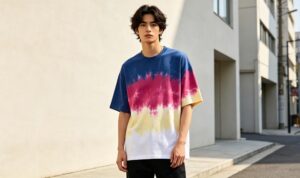
Fabric is the fundamental core that determines the printing fineness, color restoration, wearing comfort and retail grade of custom printed t-shirts. For professional fashion brands, wholesale buyers and custom procurement merchants, accurate fabric selection is the key to avoiding printing defects, improving product premium and reducing after-sales risks. Many low-end custom T-shirt products on the market have common problems such as fuzzy printing, ink penetration, easy fading, fabric deformation and rough hand feel, most of which are caused by unreasonable fabric matching and low-quality material selection. As a professional OEM custom apparel factory focusing on high-end printed T-shirt customization, GreHex summarizes systematic fabric selection experience based on long-term mass production and brand cooperation. This guide comprehensively analyzes the preferred fabrics for custom printed T-shirts, helping industry buyers accurately select materials according to positioning, crafts and sales scenarios.
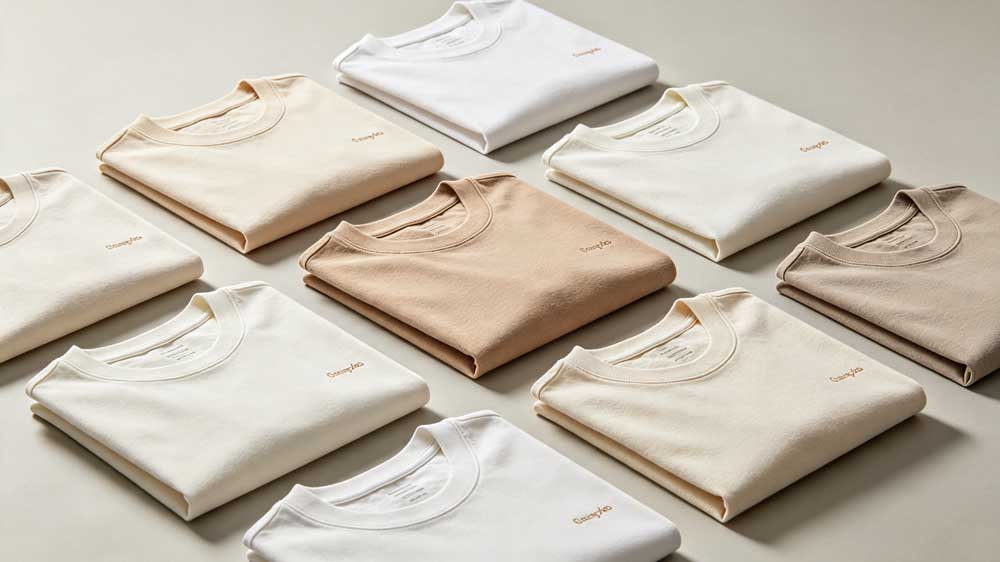
Core Principles of Printed T-Shirt Fabric Selection
Different from ordinary blank T-shirt fabric selection, printed custom fabrics need to balance printing adaptability, structural stability and wearing performance. All fabric selection of GreHex follows three core professional principles to ensure finished products meet retail-level standards.
First, Excellent Printing Compatibility. The fabric surface must be flat, uniform and free of obvious fiber gaps and particle protrusions, ensuring that printing ink or pigment can be evenly attached. High-density fabrics can effectively avoid ink penetration, pattern blurring and fine line missing, which is the basic premise of high-precision logo and pattern printing.
Second, Stable Physical Properties. Custom printed T-shirts must have stable shrinkage rate, tensile resistance and shape retention. Qualified printing fabrics need to complete pre-shrinking treatment in advance to prevent pattern deformation, cracking and offset caused by fabric shrinkage after printing and washing.
Third, Scenario Matching Grade. Match fabric gram weight, texture and thickness according to product positioning. Lightweight breathable fabrics are suitable for summer daily retail, while heavyweight high-density fabrics are suitable for high-end streetwear and limited-edition custom products, realizing precise matching of cost and product value.
Mainstream Custom Print T-Shirt Fabric Classification & Advantages
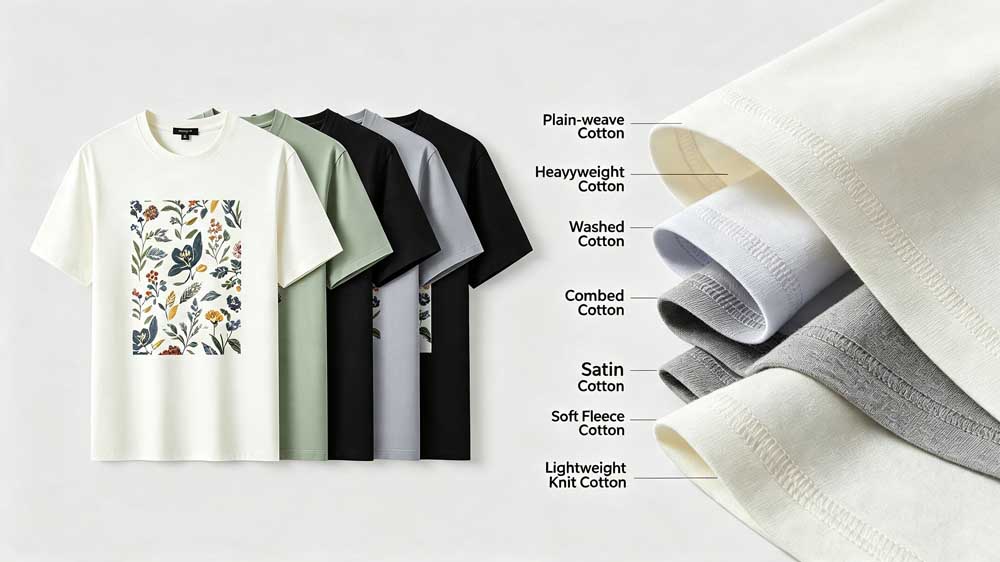
GreHex sorts out five core mainstream fabrics suitable for custom printing, covering entry-level mass customization, mid-range daily retail and high-end trendy customization, with clear positioning and differentiated performance for each fabric.
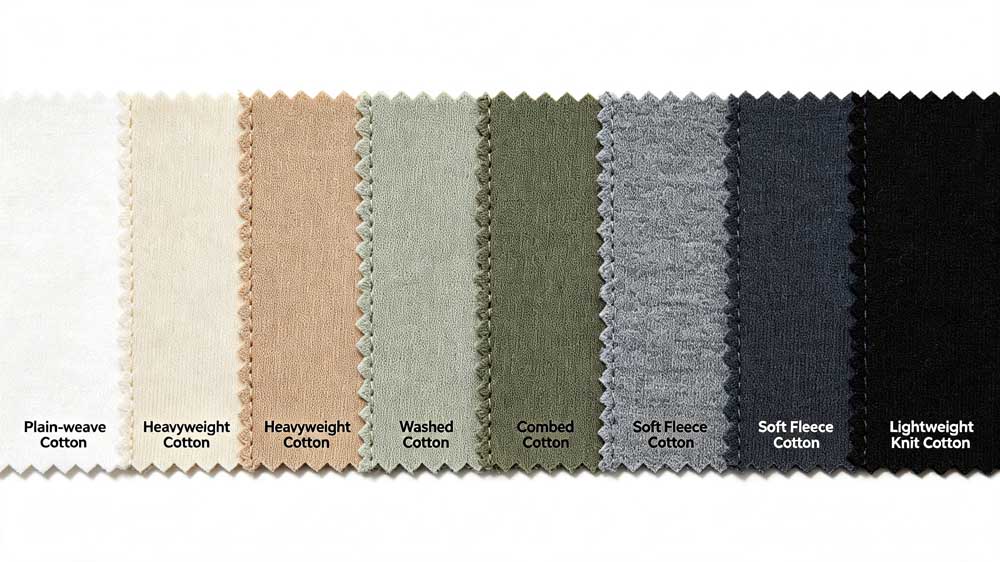
1. Ring-Spun Cotton (160GSM-180GSM) – Daily Retail Universal Fabric Ring-spun cotton is the most cost-effective universal fabric for bulk custom printed T-shirts. Compared with carded cotton, it has finer fiber weaving, flatter fabric surface and fewer coarse yarn particles. It features soft hand feel, good air permeability and stable color fastness. It is compatible with most conventional printing crafts, with clear printed patterns and natural color restoration. Suitable for brand group uniforms, event promotional clothing and daily mass retail custom T-shirts.
2. Combed Cotton (180GSM-220GSM) – Mid-to-High-End Preferred Fabric Combed cotton removes short fibers and impurity fibers through combing process, with tighter weaving density, smoother surface and more delicate texture. This fabric has extremely high printing flatness, no ink floating or pattern fuzzy phenomenon, and the printed layer is delicate and three-dimensional. It has excellent washing resistance, not easy to deform and pilling after repeated cleaning. It is the mainstream preferred material for fashion brand daily printed T-shirts.
3. Heavyweight Combed Cotton (230GSM-300GSM) – High-End Streetwear Fabric High-density heavyweight combed cotton fabric has thick and solid texture, strong vertical sense and no light transmission. The ultra-flat fabric surface can perfectly restore high-precision fine line patterns, gradient printing and large-area full-print effects. The overall garment has strong stereoscopic silhouette, not easy to wrinkle and deform. It is widely used in high-end streetwear brands, designer limited editions and premium trendy printed T-shirt customization.
4. Poly-Cotton Blended Fabric (150GSM-190GSM) – Cost-Effective Commercial Fabric Made of cotton and polyester blended proportionally, this fabric combines the softness of cotton and the wrinkle resistance and shape retention of polyester fiber. It has low shrinkage rate, neat finished garment version and low comprehensive cost. It is suitable for simple pattern printing and large-batch low-budget custom orders, commonly used in corporate activity customization and commercial promotional apparel.
5. Pima Cotton (200GSM-240GSM) – Top-Grade Luxury Custom Fabric Pima cotton belongs to ultra-long staple cotton, with ultra-fine fiber, soft and silky hand feel, excellent air permeability and high gloss. The fabric surface is flawless and flat, which can present ultra-high-precision printing details and gradient color transitions. It has superior wearing comfort and durable quality, exclusive for high-end designer brands and luxury customized printed T-shirts.
GreHex Exclusive Fabric Advantages & Differentiation
Different from ordinary factories that only provide conventional single-specification fabrics, GreHex independently optimizes and upgrades custom printing fabrics, forming unique material supply advantages in the industry, effectively solving the common defects of market conventional fabrics.
1. Full Gram Weight Customized Matching Service Most peer factories only have fixed conventional gram weight fabrics, unable to meet the differentiated thickness needs of brand seasonal products. GreHex supports full gram weight customization from 140GSM ultra-light breathable to 300GSM super-heavy thick cotton. We can adjust fabric density and thickness according to customer printing scheme and product positioning, realizing exclusive fabric customization for brand series products.
2. Pre-Shrunk & Printing-Specific Upgraded Fabrics Ordinary factory fabrics only complete basic finishing, which are prone to shrinkage and pattern cracking after printing. All GreHex printing-grade fabrics adopt secondary high-temperature pre-shrinking treatment and flat calendering finishing. The fabric shrinkage rate is strictly controlled within 3%, which completely avoids pattern deformation and displacement caused by post-production shrinkage, and the printing fitting degree is far higher than industry conventional standards.
3. Low-Impurity High-Purity Cotton Raw Material Many low-cost fabrics on the market are mixed with recycled cotton and impure fibers, resulting in rough surface and easy printing missing points. GreHex all printing dedicated fabrics use 100% new pure cotton raw materials, zero recycled cotton doping, effectively reducing fiber particle impurities. The fabric surface is smooth and clean, ensuring 100% restoration of ultra-fine printing details.
4. Exclusive Anti-Pilling & Color Fixing Finishing Aiming at the problem that printed T-shirts are easy to pilling and fade after washing, GreHex adds environmental protection anti-pilling and color fixing finishing process for all custom printing fabrics. While ensuring printing permeability and adhesion, it improves fabric friction resistance and color fastness, making the finished products more durable and suitable for long-term retail sales.
5. Batch Stable Consistency Supply Ordinary factories have unstable fabric batch differences, leading to inconsistent printing effects of different orders. GreHex adopts fixed raw material suppliers and fixed weaving parameters for all printing fabrics, with unified fabric texture, gram weight and tension standards for each batch, ensuring zero color difference and zero texture difference in long-term repeated orders for brand customers.
Fabric Adaptability for Different Printing Crafts
Different printing processes have strict requirements on fabric density, flatness and air permeability. Professional fabric-process matching is the core to ensure perfect printing effect. GreHex forms standardized matching standards for mainstream printing crafts.
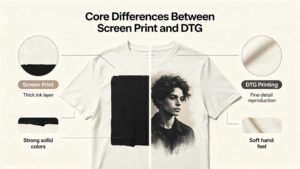
DTG Digital Direct Printing: Suitable for 180GSM-260GSM combed cotton and heavyweight combed cotton. Ultra-flat high-density cotton surface ensures accurate ink jetting, no ink diffusion, clear tiny details and natural gradient color transition. Not suitable for low-density coarse fiber fabrics.
Screen Printing: Compatible with ring-spun cotton, combed cotton and poly-cotton blended fabrics. Moderate fabric density ensures firm pigment attachment, uniform ink layer and strong coverage. It is the best matching craft for large-area solid color printing and batch mass customization.
Heat Transfer Printing: Adaptable to all high-flatness pure cotton fabrics and poly-cotton blended fabrics. Smooth fabric surface avoids transfer film wrinkles and bubble defects, with high pattern reduction degree and vivid color.
Vintage Distressed Printing: Recommended for medium and low gram weight ring-spun cotton and combed cotton. Moderate fabric air permeability and fiber toughness meet the retro washing and distressing process requirements, presenting natural old-effect texture without damaging the fabric structure.
Scenario-Based Fabric Selection Guide
To help buyers quickly complete precise selection, GreHex summarizes targeted fabric selection schemes for different sales and customization scenarios.
Brand High-End Retail & Limited Edition: Priority to Pima cotton and 230GSM-300GSM heavyweight combed cotton. Present high-grade texture and three-dimensional silhouette, match high-precision printing crafts, improve product premium and brand positioning.
Daily Fashion Casual Retail: 180GSM-220GSM high-quality combed cotton. Balance comfort, air permeability and printing effect, cost-effective, suitable for long-term mass sales and repeated orders.
Enterprise Group & Activity Customization: 160GSM-180GSM ring-spun cotton and qualified poly-cotton blended fabric. Stable quality, low cost, suitable for simple logo printing and large-batch group customization.
Summer Light Trendy Style: 140GSM-160GSM ultra-light pre-shrunk ring-spun cotton. Light and breathable, skin-friendly and comfortable, suitable for summer thin printed T-shirt new product development.
GreHex Fabric Quality Control Standard
All custom printing fabrics of GreHex implement exclusive strict quality control standards, focusing on printing adaptability and finished product stability, far exceeding conventional industry inspection standards.
Gram Weight Tolerance Standard: Fabric gram weight error is controlled within ±3GSM, ensuring uniform thickness and consistent printing effect of the whole batch.
Shrinkage Rate Standard: After secondary pre-shrinking treatment, the warp and weft shrinkage rate is ≤3%, avoiding pattern deformation after washing.
Surface Flatness Standard: Zero coarse yarn, zero fiber bumps and zero weaving defects on the fabric surface, ensuring no missing printing and fuzzy patterns.
Color Fastness Standard: Washing color fastness and rubbing color fastness reach level 4 or above, suitable for long-term retail and repeated washing.
Batch Consistency Standard: Each batch of fabrics passes texture comparison test to ensure consistent hand feel, color tone and printing performance.
Fabric selection determines the upper limit of the quality of custom printed T-shirts. Blindly pursuing low cost or single thickness will easily lead to defective printing effects and poor product experience. Professional brand customization requires precise matching of fabrics based on printing crafts, sales scenarios and product positioning. GreHex relies on diversified full-gram-weight fabric supply, printing-specific upgraded finishing technology, strict batch consistency control and unique pure cotton material advantages, to solve various fabric and printing matching pain points for global buyers.
Different from ordinary factories with single fabric supply and unstable quality, GreHex focuses on retail-level printed T-shirt fabric optimization and customization, supporting small-batch trial customization and large-batch stable supply. Whether it is high-end luxury custom styles, daily mass retail products or commercial group customization, we can provide exclusive professional fabric matching and one-stop printing OEM solutions.
Choose GreHex professional fabric customization service for printed T-shirts to optimize product quality, improve market competitiveness and avoid after-sales risks. Contact us now to obtain targeted fabric selection suggestions and factory bulk quotation.